Newsletter Subscribe
Enter your email address below and subscribe to our newsletter

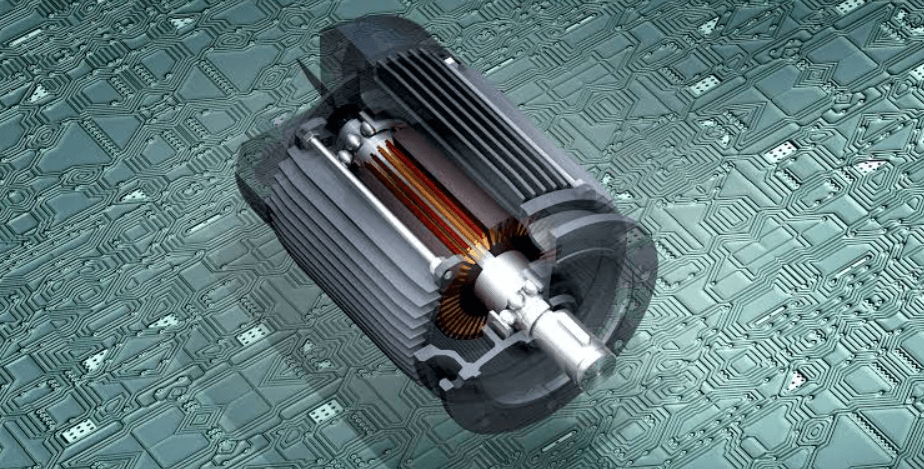
The motor manufacturing industry is changing rapidly as companies look for faster, more accurate, and more reliable production methods. Automation has become an important part of this transformation, allowing manufacturers to connect multiple production stages into a streamlined workflow. Modern equipment can handle assembly, winding, testing, inspection, and material handling with greater consistency than traditional manual processes. A electric motor assembly line can provide controlled winding for motor components, while a hair pin making machine supports the production of specialized hairpin conductors used in certain electric motor designs. Together with automated assembly technologies, these systems can help manufacturers improve productivity, quality, and overall production efficiency.
An automated motor assembly line is a connected manufacturing system designed to perform multiple stages of motor production with limited manual intervention. Instead of moving components manually between individual workstations, automated systems can transfer parts through a planned sequence.
Depending on the motor design, an assembly line may include stator assembly, rotor installation, winding, wire forming, fastening, testing, inspection, and packaging. Sensors, programmable controllers, robotic systems, and specialized machines coordinate these processes.
This organized approach allows manufacturers to establish repeatable production procedures while reducing unnecessary handling and movement.
One of the most important advantages of automation is improved production speed. Manual assembly requires workers to perform repetitive tasks individually, which can limit production capacity.
Automated equipment can perform repetitive operations continuously according to programmed parameters. Machines can also coordinate different production stations so that components move efficiently from one process to the next.
Faster cycle times can help manufacturers increase output and meet large orders without requiring a proportional increase in manual labor.
Electric motors contain many components that must be positioned accurately. Small assembly errors can affect motor performance, efficiency, durability, or reliability.
Automated assembly systems use controlled movements, sensors, and programmed positioning to place components accurately. Machines can maintain predefined assembly parameters throughout production.
This consistency is particularly valuable for manufacturers producing large quantities of similar motors because every unit can follow the same manufacturing procedure.
Winding is a critical part of motor manufacturing. The quality of rotor and stator windings can influence electrical performance and overall motor operation.
Automated winding equipment can control wire tension, winding speed, turn count, and positioning. A rotor winding machine, for example, can automate the process of placing conductive wire around a rotor according to a predefined pattern.
Integrating winding equipment into an automated production environment helps reduce manual handling and improves consistency between production batches.
Automated assembly lines can incorporate inspection and testing stations directly into the manufacturing process. This allows manufacturers to check components at different stages rather than waiting until the final assembly is complete.
Testing systems may evaluate electrical characteristics, insulation, resistance, continuity, mechanical operation, or other application-specific parameters.
When a problem is detected early, manufacturers can isolate the affected component and investigate the production stage responsible for the issue. This can reduce rework and prevent defective products from continuing through the entire production process.
Automation does not necessarily remove the need for skilled workers. Instead, it can change how employees participate in manufacturing.
Machines can handle repetitive operations such as component positioning, fastening, winding, loading, and unloading. Employees can then focus on machine supervision, quality control, maintenance, programming, and process improvement.
This can create a more efficient use of technical skills while reducing the amount of repetitive physical work required on the production floor.
Moving components between workstations manually can consume time and increase the risk of handling errors. Automated conveyor systems, robotic arms, and transfer mechanisms can move parts through the production process more efficiently.
Automated material handling also helps maintain a predictable production flow. Components can arrive at each workstation according to the required production sequence.
Better material flow can reduce waiting time between manufacturing stages and improve overall equipment utilization.
See Also: How to Sell a Trades Business: A Complete Guide for Owners
Hairpin technology has become important in certain modern electric motor designs because it uses formed rectangular conductors instead of conventional round-wire winding methods.
Manufacturing these conductors requires precise forming and bending processes. A hair pin making machine can automate important stages involved in producing hairpin conductors according to specific dimensions.
When hairpin production equipment is integrated with motor assembly systems, manufacturers can create a more coordinated workflow for producing electric motor components.
Electric vehicles depend heavily on efficient electric motors. As demand for electric mobility grows, manufacturers need production systems capable of producing large quantities of motor components with consistent quality.
Automated assembly lines can support EV motor manufacturing by integrating winding, conductor forming, stator assembly, rotor installation, testing, and inspection.
Automation is particularly valuable in high-volume environments where manufacturers need repeatable processes and detailed quality monitoring.
Production waste can increase manufacturing costs and reduce efficiency. Incorrect component positioning, damaged wires, defective assemblies, and inaccurate forming can result in rejected products.
Automated systems can help reduce these problems by controlling production parameters more consistently. Sensors can detect certain deviations, while automated inspection systems can identify problems before products reach later stages.
Better control over material usage can also reduce unnecessary consumption of copper, insulation materials, and other components.
Modern assembly lines increasingly use digital systems to monitor production performance. Sensors and controllers can collect information about machine operation, cycle times, downtime, production quantities, and quality results.
Manufacturers can use this information to identify production bottlenecks and maintenance requirements. Data-driven monitoring also makes it easier to compare production performance across different shifts or manufacturing periods.
This visibility can support continuous improvement and more effective production planning.
Modern motor manufacturers may need to produce different motor models for different applications. A rigid production system can make product changes difficult and time-consuming.
Programmable automation provides greater flexibility. Machines can store different production recipes and adjust selected parameters according to the motor design.
Flexible equipment allows manufacturers to adapt production processes without completely rebuilding their manufacturing facilities.
Automation can also support safer manufacturing environments by reducing the need for workers to perform certain repetitive or physically demanding operations.
Robotic systems and automated stator assembly line can handle tasks involving continuous movement or component transportation. Safety sensors, protective systems, and emergency controls can further support safe equipment operation.
However, proper employee training, machine maintenance, and established safety procedures remain essential.
The initial investment in automated equipment can be significant, but manufacturers evaluate automation based on its long-term operational benefits. Increased production capacity, reduced waste, improved quality, and lower dependence on repetitive manual processes can contribute to better manufacturing efficiency.
The actual benefits depend on production volume, machine configuration, product complexity, maintenance requirements, and factory layout.
For high-volume motor manufacturers, automation can provide a scalable foundation for future production growth.
Automated manufacturing is changing how electric motors and their components are produced. A rotor winding machine can provide precise and repeatable rotor winding, while a hair pin making machine can support the accurate production of hairpin conductors for suitable motor designs. When these technologies are integrated into a modern assembly environment, manufacturers can achieve better coordination between winding, forming, assembly, testing, and inspection.
Automated motor assembly lines can improve production speed, precision, quality control, material handling, and workplace efficiency. Digital monitoring and programmable systems also provide manufacturers with greater visibility and flexibility. As electric vehicles, industrial automation, appliances, and other technologies continue to depend on electric motors, automated production systems will remain an important tool for manufacturers seeking consistent, scalable, and efficient manufacturing processes.